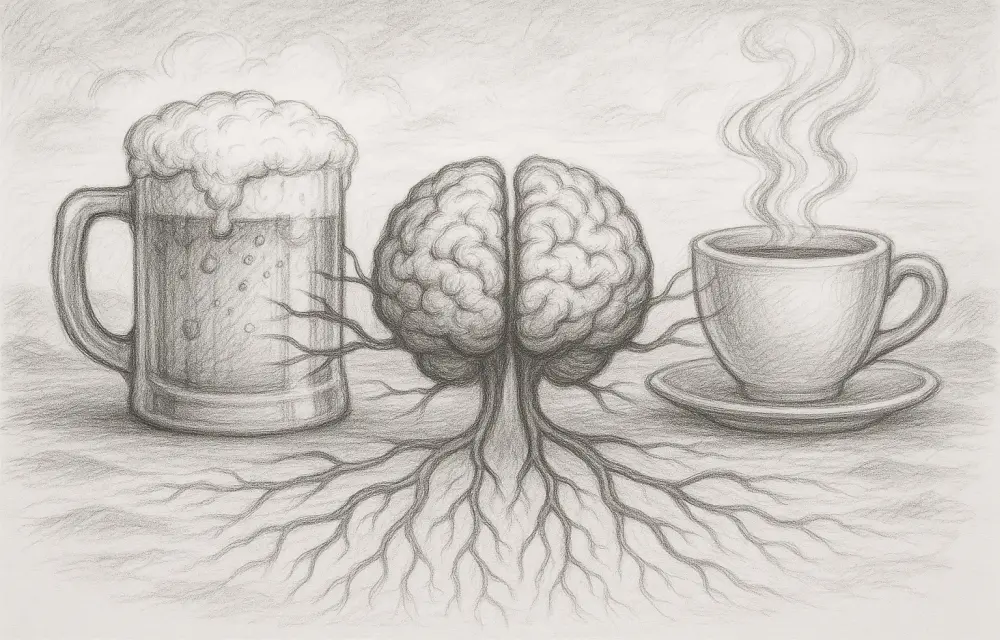
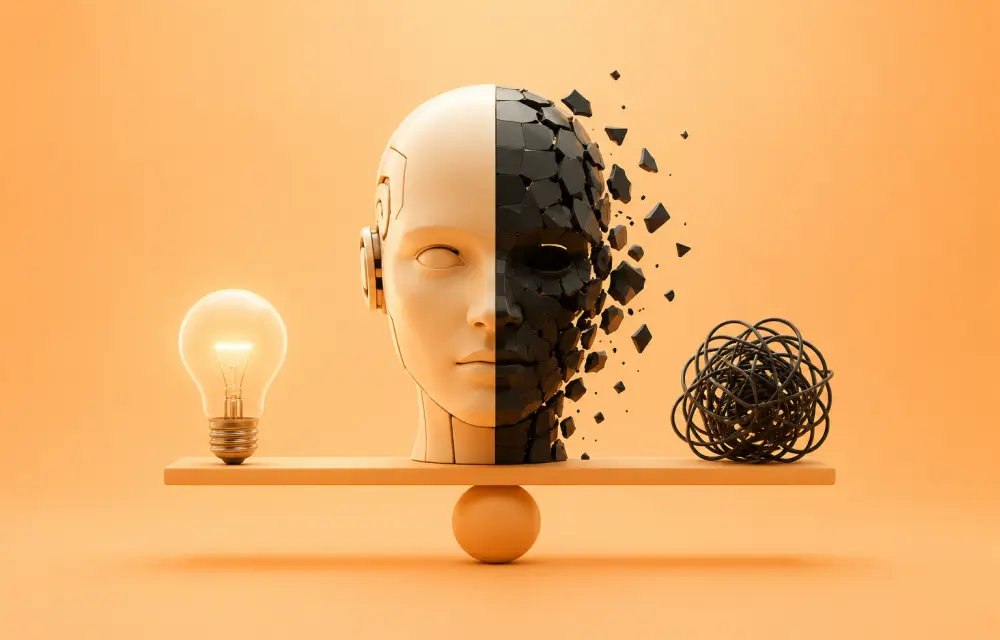
AI is both. It solves real problems faster than humans can in many cases, but it also creates new problems when it is built carelessly, deployed too quickly, or scaled without thinking about its environmental cost. The real question is not whether AI is good or bad, but whether we are using it to make development smarter and more sustainable.
The most honest answer is that AI is a powerful problem amplifier. It can reduce complexity in software development, research, diagnostics, automation, and customer support, but it can also magnify bad processes, waste energy, and increase pressure on water and power infrastructure. That duality is what makes the AI conversation so important right now.
AI as a problem solver
AI is already helping teams handle complex work that used to take much longer. In development, it can assist with code generation, bug detection, testing, documentation, and workflow automation. In business, it can speed up analysis, improve decision-making, and reduce repetitive manual tasks.
That makes development easier in a very practical way. A small team can now build faster, test quicker, and serve users with fewer resources. For startups, agencies, and enterprises, AI can remove friction from the product development cycle and shorten the distance between idea and execution.
AI is also useful because it helps people focus on the hard part: defining the problem correctly. Once a problem is clear, AI can support the solution. That is where the real value lies.
When AI becomes a problem creator
The trouble starts when AI is treated like a universal fix. If the process is messy, the data is poor, or the strategy is unclear, AI does not clean that up automatically. It usually scales the mess faster.
This is why many teams discover that AI creates more output, but not always better output. It can generate more code, more content, more decisions, and more automation, but if the foundation is weak, the result is just faster chaos. In that sense, AI can become a problem creator when companies rely on it without structure, review, or human judgment.
There is also a second layer to the problem: infrastructure. AI does not run in the air. It runs on data centers, and data centers require enormous amounts of electricity and cooling. That is where the environmental concern becomes serious.
The water problem behind AI
One of the least talked about costs of AI is water usage. Data centers generate a lot of heat, and cooling them often requires water-intensive systems. This means the growth of AI is not only an energy issue, but also a water issue.
That matters because many of these facilities are built in regions where water is already under pressure. When AI scale grows quickly, local communities can feel the impact through higher resource demand, environmental strain, and sustainability concerns. So while AI may solve digital problems, it can create physical-world problems at the same time.
This is where the industry needs to mature. A future that depends on intelligent systems must also depend on responsible infrastructure.
Smarter development, not just faster development
The best use of AI is not “do everything faster.” It is “do the right things with less waste.” That means using AI to simplify repetitive development tasks, support decision-making, and improve productivity without replacing good engineering discipline.
Development becomes easier when AI is used as an assistant rather than an autopilot. It can help teams write and review code, summarize information, detect patterns, and automate smaller tasks. But human oversight still matters for architecture, ethics, quality, and long-term product thinking.
If businesses want AI to truly help, they need to pair it with clear workflows, clean data, and strong review systems. Otherwise, they risk turning a productivity tool into a hidden liability.
The sustainable AI question
If AI is going to keep growing, then sustainability cannot remain a side conversation. Companies need to think about where their models run, how efficiently their data centers operate, and how much water and electricity their systems require.
That means choosing smarter infrastructure, improving cooling efficiency, reducing waste, and designing systems that do not depend on environmental overuse. The same intelligence used to optimize apps and products should also be used to optimize the physical footprint of those systems.
In other words, the future of AI should be measured not only by what it can do, but by what it costs the planet to do it.
The balanced view
So is AI a problem solver or a problem creator? It depends on how it is used.
Used well, AI can reduce complexity, speed up development, and help humans solve difficult problems more effectively. Used carelessly, it can scale poor decisions, increase environmental pressure, and create new forms of waste. The real challenge is to keep the benefits while controlling the damage.
AI is not the enemy. Unchecked AI is.
Final thoughts
The smartest approach is to treat AI as a tool that needs direction, discipline, and responsibility. It can absolutely make development easier, especially when teams are trying to solve complex problems faster. But if we ignore the cost behind the curtain especially water consumption, energy demand, and infrastructure strain then the solution starts to look like a different kind of problem.
The future should not be about choosing between innovation and responsibility. It should be about building AI systems that solve problems without creating bigger ones in the process.
FAQ
Is AI more of a problem solver or a problem creator?
It is both. AI solves many tasks efficiently, but it can also create new issues when used without strategy or sustainability planning.
How does AI make development easier?
It helps with code generation, testing, automation, analysis, and repetitive tasks, which saves time and improves workflow.
Why is AI considered environmentally challenging?
Because AI depends on data centers that use large amounts of electricity and water for cooling.
Can AI scale without harming the environment?
Yes, but only if companies invest in efficient infrastructure, better cooling methods, and responsible deployment.
What is the safest way to use AI?
Use it as an assistant, not a replacement for human judgment, and pair it with clean processes and sustainable infrastructure.