
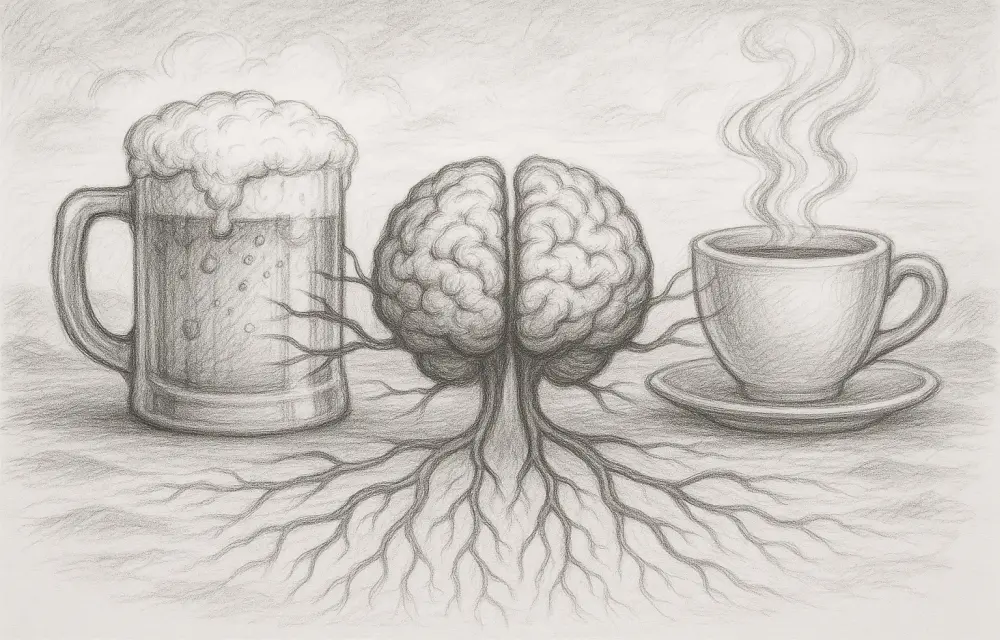
Inside the brain of the human consciousness, two beverages take supreme as the most consumed psychoactive substances worldwide: beer (representing alcohol) and coffee (caffeine). Each serves a distinct psychological purpose: one offers the gentle enjoyment of forgetting reality, while the other provides the sharp bump needed to conquer it. But which truly serves the brain better, and why do millions find themselves enslaved to these liquid companions?
The Great Neurochemical Divide
Alcohol: The Reality Eraser
Alcohol functions as the brain’s sedative, a chemical combination that dampens the harsh and inconvenient edges of consciousness. When ethanol enters the bloodstream, it increases adenosine activity, the brain’s natural sleepiness chemical, while simultaneously releasing dopamine in the reward centers. This dual action creates alcohol’s signature effect: a temporary effect followed by relaxation and, ultimately, the blessed boon of forgetfulness.
The brain craves this escape because modern life bombards us with nonstop stressors. We are daily struggling with our family, business, and financial issues, which give constant stress to our brain. Alcohol offers what psychologists call “cognitive disengagement,” a temporary shutdown of the prefrontal cortex where worry, planning, and self-criticism reside. For many, that evening beer isn’t just refreshment; it’s a chemical key that unlocks the mental prison of daily anxieties.
Coffee: The Reality Amplifier
Caffeine operates through an entirely different mechanism, functioning as the brain’s performance enhancer. It blocks adenosine receptors, preventing the natural tiredness signal from reaching consciousness, while simultaneously increasing dopamine sensitivity. This creates caffeine’s characteristic effect: heightened alertness, improved focus, and enhanced cognitive processing.
Unlike alcohol’s numbing activity, coffee sharpens reality’s edges. It transforms the sluggish morning brain into a focused instrument capable of tackling complex tasks, making difficult decisions, and maintaining attention for extended periods.
The Addiction Paradox: Why We Can’t Stop
The Alcohol Trap
Alcohol addiction starts from its dual promise and betrayal. Initially, it delivers on its promise of stress relief and social disinhibition. However, chronic consumption creates a vicious cycle: alcohol temporarily increases adenosine, but the brain compensates by reducing natural adenosine production. This means that without alcohol, the brain becomes hyperalert and anxious the exact opposite of what the person feels.
Regular alcohol users find themselves drinking not for pleasure, but to achieve what researchers call “negative reinforcement” drinking to avoid feeling worse. The brain essentially holds itself hostage, demanding alcohol to return to baseline functioning.
The Caffeine Dependency
Caffeine addiction follows a different but equally compelling pathway. Regular consumption leads to adenosine receptor upregulation; the brain creates more adenosine receptors to compensate for caffeine’s blocking action. Without caffeine, users experience withdrawal symptoms including fatigue, irritability, and difficulty concentrating.
Interestingly, habitual coffee drinkers show distinct brain network changes, with decreased connectivity in somatosensory and limbic regions. This neuroplasticity suggests that coffee literally rewires the brain for dependency, making it difficult to function at normal capacity without regular caffeine intake.
Productivity Showdown: Which Wins?
Alcohol’s Productivity Profile
Alcohol’s relationship with productivity is complex and largely negative. While small amounts might reduce social anxiety in networking situations or creative blocks through reduced inhibition, even moderate consumption impairs memory formation, motor coordination, and executive decision-making.
The notion that alcohol enhances creativity is largely mythical. Research shows that while alcohol might make people feel more creative, objective measures reveal decreased problem-solving ability and impaired judgment. The temporary confidence boost comes at the cost of actual performance degradation.
Coffee’s Performance Enhancement
Caffeine demonstrates clear productivity benefits across multiple domains. Studies consistently show improvements in:
Sustained attention and vigilance
Working memory performance
Information processing speed
Physical endurance and reaction times
Mathematical and logical reasoning
The key lies in optimal dosing. Low to moderate caffeine intake (50-200 mg) enhances performance, while excessive consumption (>400mg daily) can trigger anxiety, jitters, and decreased performance.
The Dark Side: Consumption Limits and Consequences
Alcohol’s Narrow Safety Window
Alcohol’s margin between “beneficial” and harmful consumption is remarkably thin. Even moderate drinking (1-2 drinks daily) carries health risks, while regular consumption above this threshold significantly increases risks of liver disease, cardiovascular problems, and cognitive decline.
The World Health Organization states that no level of alcohol consumption is entirely safe, challenging the popular notion of “healthy drinking.” For productivity specifically, any amount of alcohol impairs next-day cognitive performance through disrupted sleep architecture and mild dehydration.
Caffeine’s Effects
Caffeine’s safety profile is considerably better, with most adults tolerating up to 400 mg daily (roughly 4 cups of coffee) without significant adverse effects. However, individual sensitivity varies dramatically, and consumption timing matters enormously.
The productivity sweet spot appears to be 100-200 mg consumed in the morning, with a secondary smaller dose (50-100 mg) in the early afternoon if needed. Consumption after 2 PM significantly disrupts sleep quality, undermining the very productivity benefits caffeine provides.
The Psychological Truth: Escape vs Enhancement
Perhaps the most profound difference lies in how these substances serve psychological needs. Alcohol offers temporary escape from an overwhelming reality, a chemical vacation from stress, anxiety, and self-consciousness. Coffee, conversely, provides the mental ammunition needed to engage more effectively with reality’s challenges.
Modern society presents us with an impossible choice: we need both escape and enhancement. We need moments of mental respite from constant stimulation, yet we also need peak cognitive performance to navigate complex work demands and personal challenges.
The wisest approach might be strategic rather than habitual consumption. Using coffee as a tool for focused work sessions while reserving alcohol for genuine social or relaxation purposes rather than daily stress management offers the benefits of both while minimizing the risks.
The Verdict
Neither beer nor coffee is superior; they serve different neurochemical purposes in the human experience. Coffee enhances our ability to engage with reality, while alcohol provides temporary relief from it. The key lies not in choosing sides but in understanding that both substances are powerful psychoactive drugs deserving of respect, moderation, and intentional use rather than mindless consumption.
The brain’s need for both stimulation and sedation reflects the complex demands of modern existence. Perhaps the real solution isn’t found in either cup or bottle, but in addressing the underlying conditions that make chemical escape and enhancement feel necessary in the first place.